 Created : 29 Sep 2026
Last Update : 29 Sep 2026
Created : 29 Sep 2026
Last Update : 29 Sep 2026
If you can’t report it, it didn’t happen
In regulated manufacturing, reporting is effectively a regulatory principle.
The guidelines and data integrity framework above all rest on the same foundation: quality events need to be documented in a way that is attributable, contemporaneous, and retrievable.
For label inspection, that creates a specific challenge. You might be running excellent inspection processes — but if the data trail doesn't demonstrate that clearly, then it doesn't protect you.
Three reporting practices that make a real difference are:
-
Batch-level inspection summaries that are auto-generated and attached to the label batch record, not manually compiled later
-
Failed label trend reporting reviewed at least monthly, with a documented review sign off (this is evidence of proactive label quality - management under ISO 13485)
-
Exception reports that detail not just which labels failed but the failed inspections and the site, station, operator, date and time of the failures.
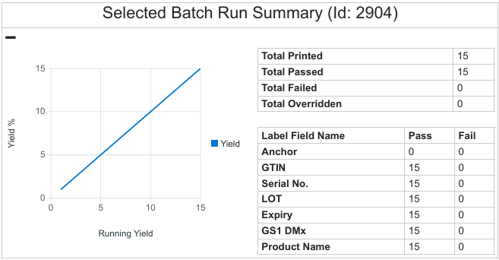
Click the image to view an example report including results for each inspection type
The label production teams that feel most confident going into audits aren't necessarily doing more inspections. But they do have access to integral, automated reporting so can provide evidence and visibility of every label produced when someone asks for it.
Where are the reporting gaps in your label inspection process and how do you get round them now - paper records and individual operator notes?
Contact the Perceptor team about a label inspection solution that automates the entire label production process – from printer to audit reporting.
We're putting together a library of real labels used in a variety of industries to show where and why some fail and how the batch reconciliation report that is automatically generated every time the label batch runs helps the label room avoid non-compliant labels (and, therefore, products!) entering the supply chain.
 If you can’t report it, it didn’t happen
 Re-set password